

.webp)
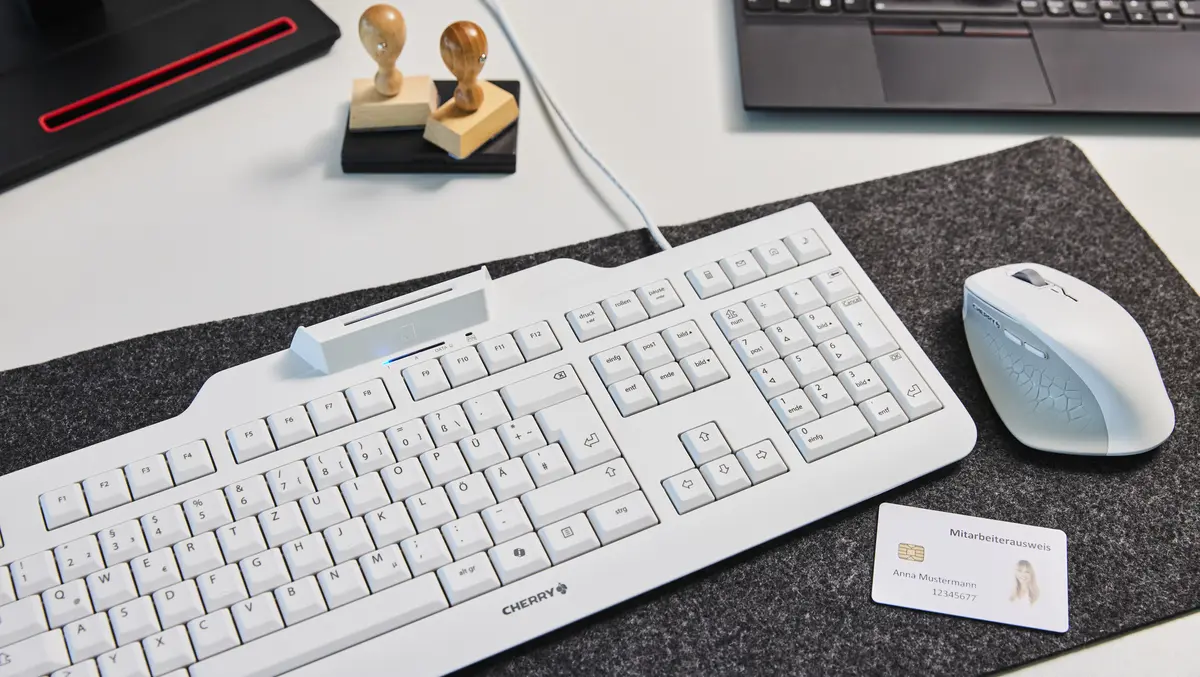
Cherry has introduced two smart card devices, the Smart Board 1150 and the Smart Terminal ST-1150, replacing earlier models in its security range.
The launch adds a keyboard with an integrated smart card reader and a separate desktop smart card terminal for organisations with strict security and procurement requirements. Both are built on a new in-house electronics and firmware platform.
The Smart Board 1150 succeeds the KC 1000 SC, while the Smart Terminal ST-1150 replaces the Smart Terminal ST-1144. In both cases, the redesign focuses on updated internal electronics and firmware rather than a major change in desktop role.
Both devices support firmware updates after deployment through a flash-based controller. They also work with Microsoft's native CCID driver and pcsc-lite on Linux and macOS, allowing connection to existing systems without vendor-specific drivers.
For IT departments managing mixed Windows, Linux and Apple estates, that could simplify support where smart cards remain part of daily access, login and authentication. It also reduces the need to maintain separate software packages for reader support.
Security focus
Cherry is targeting government departments, defence organisations and other regulated workplaces where smart cards are used for login, electronic signatures, access control and the protection of sensitive information. The Smart Terminal ST-1150 meets TAA and FIPS-201 requirements and supports ISO/IEC 7816, CCID and CAC standards.
The Smart Board 1150 is also available in a TAA-compliant version for buyers that must meet procurement rules under the U.S. Trade Agreements Act. Such requirements often apply in public sector and military purchasing, where product origin can affect eligibility.
The separate terminal also marks a manufacturing change. The Smart Terminal ST-1150 will be made entirely in Europe, a shift that may appeal to customers seeking tighter control over sourcing or lower supply-chain exposure in sensitive deployments.
Desktop use
The Smart Board 1150 combines a full-size keyboard with an integrated smart card reader and is intended for workstations where staff need to authenticate into protected systems or handle sensitive data using card-based credentials.
The card reader uses a low-profile design intended to support one-handed operation. The keyboard also includes a Copilot key, reflecting a broader trend in PC accessories as hardware makers adapt layouts to software features now appearing in current operating systems.
Cherry said the Smart Board 1150's packaging volume has been reduced by about 15 per cent, affecting shipping and logistics rather than the product's main security function. It did not indicate any change in the device's target customer base from the previous model.
The Smart Terminal ST-1150 is a standalone reader and writer for smart cards used in access control, network login and online transactions. It includes a metal-weighted base intended to help users operate it with one hand at a desk.
Cherry also described the terminal as energy-efficient, though it did not provide detailed consumption figures. In the security market, its main selling points are likely to be compliance support, broad operating system compatibility and the option to update firmware after installation.
Pricing and portfolio
The Smart Board 1150 is priced at GBP £43.99, while the Smart Terminal ST-1150 costs GBP £31.99. Both are available now.
The launch broadens Cherry's presence beyond better-known PC input devices such as keyboards and mice, and underlines its continued interest in specialist hardware for security-sensitive workplaces. Smart card readers remain a steady niche in public sector and regulated environments, even as many consumer services shift to app-based authentication.
For those users, the ability to deploy devices without extra drivers and keep them updated over time may matter more than visible design changes. Cherry said the two new products establish a foundation for the platform's long-term development and adaptation to future regulatory and security requirements.