

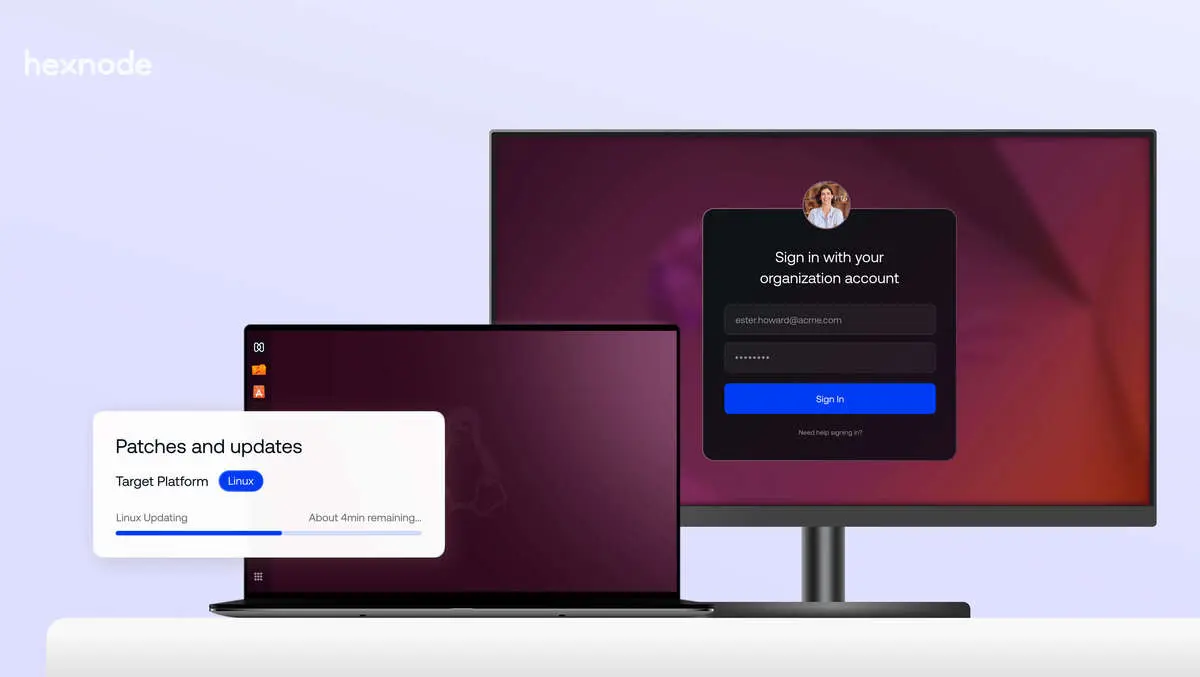
Hexnode expands Linux patching & login tools in UK
Tue, 20th Oct 2026 (Today)
Hexnode has expanded its Linux support with patch management in Hexnode UEM and cloud identity-based device login in Hexnode Access. The move adds Linux to the company's existing device management and identity framework in the UK.
The expansion adds centralised patching for Ubuntu, Linux Mint, Debian and Fedora through Hexnode UEM, alongside Linux sign-in with work credentials through Hexnode Access. The changes are intended to give IT teams more control over software updates and employee authentication on Linux devices.
The announcement comes amid patching concerns for British organisations. The UK government's Cyber Security Breaches Survey 2025/2026 found that only 34% of businesses had a policy to apply software security updates within 14 days.
For IT departments running mixed device estates, Linux often sits outside the update and identity processes used for Windows and macOS. The latest expansion is designed to bring Linux devices into the same administrative workflows, reducing the need for separate tools, scripts and account management practices.
Patch controls
Hexnode has added automated and manual deployment options for Linux updates. Administrators can automate updates based on criteria such as severity or release date, or choose specific patches for more targeted deployment.
IT teams can also schedule rollouts, require administrator approval, and limit installations and reboots to maintenance windows. These controls are intended to help organisations manage update timing more tightly across different groups of devices.
The platform also introduces deployment rings for Linux, allowing updates to be rolled out in stages. This lets administrators check results on selected device groups before extending deployment more widely.
From the Hexnode UEM console, administrators can review missing updates and deployment outcomes across managed Linux devices. Linux patch management support applies to Ubuntu 18.04 LTS and later, Linux Mint 21 and later, Debian 10 and later, and Fedora 36 and later.
Identity access
Alongside update management, Hexnode has extended cloud identity login to Linux devices through Hexnode Access. Linux now joins Windows and macOS as supported platforms for the company's device login product.
The Linux sign-in feature is available on Ubuntu, Fedora, Red Hat and Linux Mint. It supports authentication through Google Workspace, Okta, Microsoft Entra ID, OneLogin and Hexnode IdP.
Users are given a dedicated option to log in with a work account instead of a separate local password. After successful authentication, the system can create a new local account or link an existing one, reducing manual setup work for IT teams.
Hexnode has also added controls for offline access. Administrators can define how long a linked user can continue to access the desktop before re-authentication is required, while offline fallback allows access during connectivity interruptions within those limits.
The identity feature is aimed at organisations that already use cloud accounts for business applications but still maintain separate passwords for endpoint access. Extending the same work identity to device sign-in could simplify account administration and reduce password sprawl for employees.
The latest Linux additions also build on Hexnode's UK relationship with Kite Distribution, which it described as its sole UK distributor for UEM products. That arrangement gives the company a direct route into the British market as it broadens the scope of its management tools.
Providing context for the announcement, Sahad M, Chief Technology Officer at Hexnode, said: "Enterprises should be able to choose the operating systems their workloads demand while maintaining consistent standards of control.
"That means deciding which software changes reach which devices, controlling how those changes are introduced, and connecting device access to identities the organization already manages. This expansion brings Linux further into that operating model."