

Space Solar & Lonestar to host data modules in orbit
Mon, 1st Jun 2026 (Today)
Space Solar and Lonestar have signed a Letter of Intent to host data storage modules on orbital power platforms. The agreement links a UK space-based solar company with a US specialist in sovereign data storage.
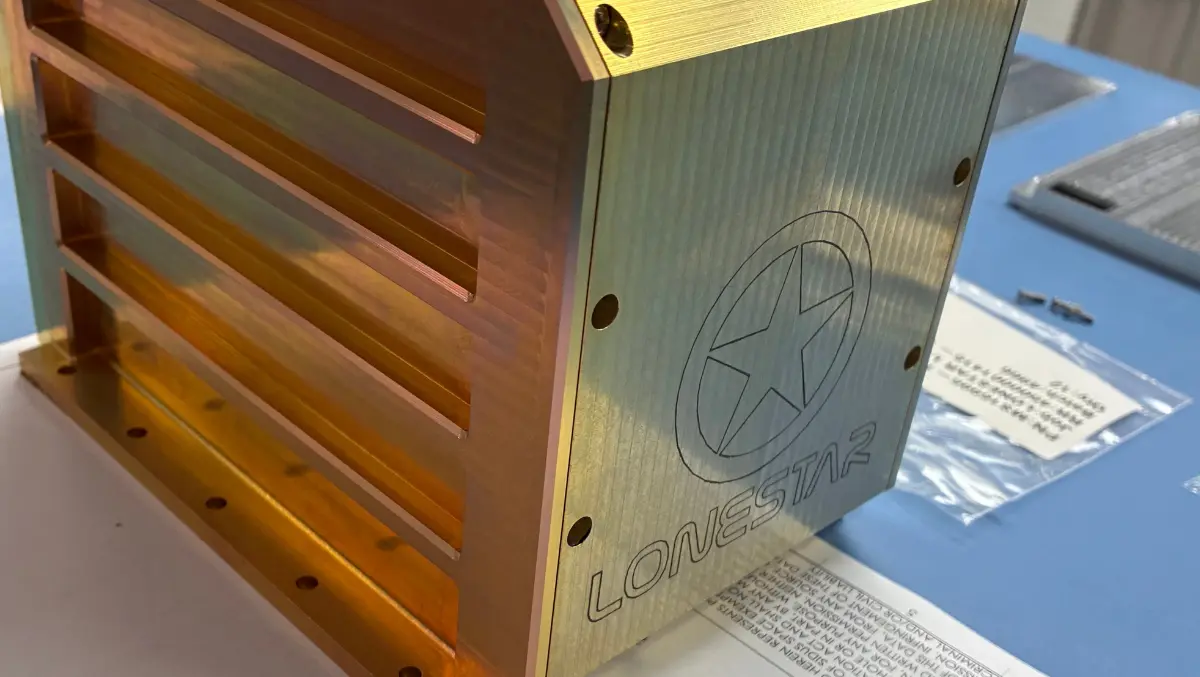
The partnership will host Lonestar's StarVault data storage modules aboard Space Solar spacecraft and adapt the systems for use on larger structures assembled in orbit. The companies will work across three areas: joint engineering, mutual data services, and deployment in Low Earth Orbit, Medium Earth Orbit, and Geostationary Orbit.
The tie-up addresses a technical challenge in orbital data infrastructure: the electrical power available to support data storage and processing systems in space. Current deployable solar arrays tend to top out at about 500 kilowatts, while engineering complexity rises sharply above 200 kilowatts, according to the companies.
Space Solar says its modular structures, assembled in space rather than launched as a single unit, are designed to move beyond that limit. Larger structures could provide both the electrical supply and the physical area needed to host distributed data systems at greater scale.
Lonestar has been developing sovereign data storage systems in space and says it has already demonstrated data storage from the lunar surface. Under the planned collaboration, Space Solar would act both as a host for Lonestar's systems and as a potential user of the storage and processing services itself.
Three workstreams
The first workstream will focus on engineering studies to adapt StarVault modules for operation on Space Solar platforms. This is intended to test how Lonestar's systems would function on a larger orbital structure than those used in earlier missions.
The second covers data services. Space Solar's own missions and customers could use Lonestar's storage and processing systems, creating a model in which orbital power infrastructure and data services are offered together.
The third concerns deployment across several orbital regimes. The aim is to place StarVault modules in low, medium, and geostationary orbits, extending the project beyond a single mission architecture.
Lonestar is expected to fly as a rideshare customer on OSPREY Builder, Space Solar's in-space assembly demonstration mission. That mission is currently planned for 2028, with larger hosted structures planned from 2030.
The announcement also said the parties intend to form a joint technical working group, identify pilot mission opportunities, and explore broader structures for investment, joint ventures, or strategic partnerships.
Orbital demand
The agreement reflects a wider push in the space sector to place more data infrastructure beyond Earth, including storage systems and computing resources for government and commercial users. That interest has been driven in part by demand for data sovereignty, resilience, and geographic separation from terrestrial risks.
For companies trying to build such systems, the economics and engineering of power supply remain a central constraint. Data storage and processing equipment need consistent electricity, while the launch and deployment limits of spacecraft make large-scale power generation difficult.
Space Solar's approach is based on assembling larger structures once components are in orbit. The company has been developing space-based solar power technology intended to collect energy in space and transmit it wirelessly, although the immediate focus of this partnership is on using assembled platforms to support hosted systems in orbit.
Lonestar, for its part, has been positioning itself around sovereign data storage beyond Earth, with systems designed to give customers a dedicated remote location for data. The new arrangement suggests a route to scale if larger orbital platforms can be built and operated reliably.
Sam Adlen, Co-CEO of Space Solar, described the partnership as a practical fit between the two businesses. "Teaming up with Lonestar is one of those partnerships that makes immediate sense. They are pioneers in sovereign, resilient data storage in space. We are building the orbital power and platform area that lets that vision scale.
"Together we can offer customers something neither of us could deliver alone, from first demonstration missions on OSPREY Builder through to large, distributed data infrastructure across multiple orbits.
"It's fantastic to be on this journey with Chris and the Lonestar team, and excited by what this partnership opens up for the wider orbital economy," Adlen said.
Chris Stott, Chair and Founder of Lonestar, said access to power was essential for expanding the company's systems beyond early deployments. "At Lonestar we are building the future of resilient, sovereign data storage in space. Having already tested data storage from the lunar surface and in cislunar space, we are now scaling toward constellations of connected vaults across every orbit, and doing that at scale needs power.
"Space Solar's in-space assembly capability is key. Their platforms could one day host hundreds, even thousands, of our systems as a single connected fabric in space.
"Teaming up with Sam, Martin and the Space Solar team is a significant step forward for both companies, and for the orbital data economy as a whole," Stott said.