

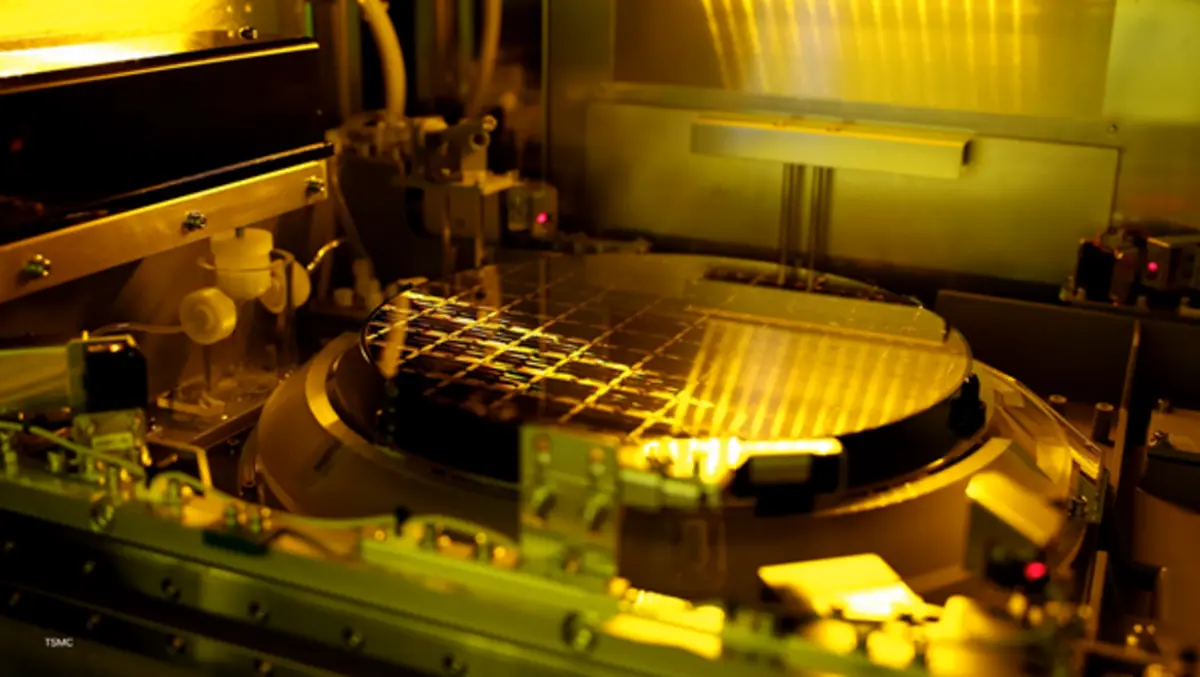
TSMC uses Nvidia AI to boost chip factory efficiency
Tue, 2nd Jun 2026 (Today)
TSMC is using Nvidia's AI and GPU computing tools in semiconductor design and manufacturing, spanning production and inspection in its fabs.
The deployment covers computational lithography, transistor and process simulation, advanced process control, fab scheduling, and automated defect inspection. TSMC is also exploring Nvidia Omniverse libraries to build FabTwin, a virtual factory environment for testing layouts and simulation workflows before making physical changes.
The announcement underscores how AI is moving deeper into chip production as manufacturers grapple with the growing complexity of advanced process nodes. Tasks such as lithography, wafer inspection, and process control require large amounts of computing and increasingly rely on models that can analyse physics data, images, and operational variables at the same time.
At the centre of the effort are Nvidia's CUDA-X software libraries and a range of AI models running on its GPUs. TSMC is applying those tools across the semiconductor production chain to improve turnaround times, energy use, yield, and factory productivity.
Production workloads
In lithography, TSMC is using Nvidia's cuLitho library for chip mask design calculations. Nvidia said the software improves cost effectiveness or cycle time by 20% to 50% compared with CPU-based computational lithography, while maintaining the same cost of ownership.
For transistor, equipment, and process simulation, TSMC is using the cuEST electronic structure simulation library. Nvidia said this makes chemistry simulations for semiconductor material design 50 times faster on average.
Process control is another focus. TSMC is using the cuML machine learning library to run large-scale analytics on GPUs, allowing it to process hundreds of thousands of parameters from thousands of production steps. Those data can then serve as inputs for machine learning models aimed at reducing process variation.
In fab operations, TSMC is also using GPU-based scheduling on Nvidia H200 chips. The companies said this has improved factory productivity by helping TSMC manage complex production constraints and streamline manufacturing paths.
Defect inspection
The partnership also extends to optical inspection, where smaller defects can directly affect yield as semiconductors become more advanced. TSMC is using Nvidia Metropolis and the TAO Toolkit for defect classification based on vision AI.
The system improves detection of defects at the nanometre scale, according to the companies. They added that it also reduces the need for repeated labelling and retraining when process conditions, inspection tools, and defect types change.
The use of AI in this part of the factory reflects a broader push by chipmakers to automate tasks previously limited by manual review or conventional rule-based systems. Faster inspection and classification can help fabs identify problems earlier in production and reduce scrap or rework.
Digital fab model
TSMC is also exploring Nvidia Omniverse libraries to create FabTwin, a digital representation of a semiconductor fab. The goal is to test tool layouts and simulation workflows virtually before making decisions on the factory floor.
Semiconductor plants are among the most complex industrial facilities, with production depending on close coordination between tools, materials handling systems, robots, people, and building services. A digital model of those interactions could help engineers compare alternative configurations and identify bottlenecks before committing capital to physical changes.
"NVIDIA and TSMC have worked together for nearly three decades to push the limits of computing," said Jensen Huang, founder and chief executive officer of Nvidia.
"TSMC is bringing NVIDIA AI and accelerated computing into the fab itself, tackling some of the world's most complex design and manufacturing challenges with simulation, optimization and AI to improve speed, efficiency and yield for the next generation of chips," Huang said.
TSMC described the latest work as part of a long-standing relationship between the two companies. Nvidia relies on TSMC as a key manufacturing partner for many of its advanced chips, while TSMC increasingly uses computing systems and software to manage the complexity of leading-edge semiconductor production.
"TSMC and NVIDIA have built a long-standing partnership rooted in advancing the technologies that make the next generation of computing possible," said C.C. Wei, chairman and chief executive officer of TSMC.
"By using NVIDIA accelerated computing and AI across fab operations optimization, lithography, process control and inspection, TSMC is strengthening our technology leadership and manufacturing excellence to support our customers' future products and success," Wei said.