Security Posture stories
The deal gives the customer experience outsourcer 24/7 threat detection and incident response as clients demand stronger proof of security controls.
Recognition of service providers underscores the growing reliance on outsourced cyber advice as smaller firms seek stronger resilience without in-house teams.
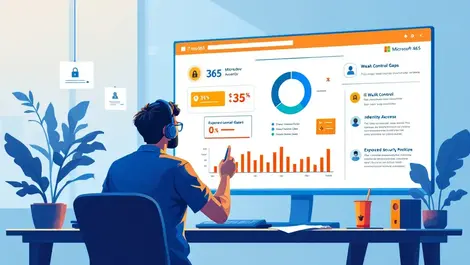
The research aims to expose gaps in Microsoft 365 controls, after CoreView found many IT leaders overstate their security posture.
Small businesses insured by Cowbell can now get AI-guided cyber risk actions in plain English, with human experts on hand when needed.
Security teams can now test whether their tools spot attacks, after UltraViolet Cyber said Equinox can map gaps in under 30 minutes.
Security teams could cut investigation time from hours to minutes as Exabeam adds AI tools for triage, reporting and local deployment.
Governments and standards bodies are pushing firms to map cryptography now, as missing assets could leave them exposed to post-quantum risks.
The update is aimed at speeding recovery and containing breaches as AI agents gain access to corporate identity systems.
By automating access changes end to end, the tie-up aims to cut delays and audit gaps when users move roles or leave an organisation.
Most UK organisations would struggle to meet a proposed 24-hour cyber incident reporting rule, Cisco research suggests.
Many security chiefs expect to curb AI agent use within 18 months as fears grow over unauthorised access and weak audit trails.
Many firms still cannot stop AI agents from causing damage before execution, leaving systems exposed to production outages and data loss.
Security teams can now use narrowly scoped agents to triage alerts, investigate cases and check systems without giving AI unrestricted access.
Smaller businesses and MSPs are being offered controls to stop staff sending sensitive data into generative AI tools, amid growing governance gaps.
The deal gives the institute round-the-clock threat monitoring and executive cyber oversight as it seeks to protect nearly 40,000 members and 8,600 students.
Enterprise buyers are spending more to secure AI agents, with Snyk saying Evo now drives 60% of new deals and larger contracts.
The new capital will help the Miami-based firm expand beyond audit readiness as demand grows for continuous security checks across regulated industries.
Security teams can now verify which reported weaknesses are actually exploitable in their own environments before spending time on false alarms.
Blind spots in agentic AI could turn routine tasks into breaches, as Canadian firms ramp up use faster than oversight can keep pace.
MSPs can now test a tool that spots gaps in prospects' tech stacks before first meetings, then tracks changes through onboarding.