Thermal Management stories
Retrofitting existing sites could ease Britain's AI capacity crunch faster than new builds, Airsys has told MPs amid power and planning bottlenecks.
The top-end iPhone range gains AI features and a variable-aperture camera, as Apple targets better photos, battery life and performance.
Apple is entering the foldable market with a dual-screen handset that adds split-screen multitasking and starts at AUD $3,499.
Australian buyers will get Dell's new gaming displays and lightweight 14S laptop from October, though local pricing remains undisclosed.
Rising cloud and AI demand is set to almost quadruple spending on data centre physical infrastructure to USD $128.27 billion by 2034.
Production cars in Europe will get a lighter, cheaper 5G system as LG starts deliveries to a premium carmaker.
Delivery bottlenecks, rather than demand, are now the main risk as AI-fuelled data centre expansion pushes revenue to USD $120 billion by 2030.
Energy savings in dense AI clusters are driving stricter limits on 200G linear pluggable optics, as Semtech targets 10W modules and a 500-metre reach.
It gives infrastructure teams rack-level visibility and control as demand rises for remote power monitoring in dense data centres and edge sites.
The validation could help data centre operators choose cooler fluids that cut maintenance risk as AI hardware packs more heat into racks.
Data centre operators may gain relief as AMD says its AI systems could use four times less energy per unit of work by mid-2026.
Data centre operators gain more assurance as Castrol's PG25 and PG25T pass NVIDIA checks for direct-to-chip AI cooling.
Pressure is mounting on data centre operators as AI workloads push chip temperatures higher and make liquid cooling more urgent.
Rising AI heat loads are pushing data centres towards liquid cooling, as Echelon and Trinovium begin work on fluids and monitoring.
The deal gives RT-One a way to validate AI infrastructure and start serving customers before its campuses are finished, cutting launch delays.
The combined design could cut installation costs and copper use sharply as operators race to build more efficient AI data centres.
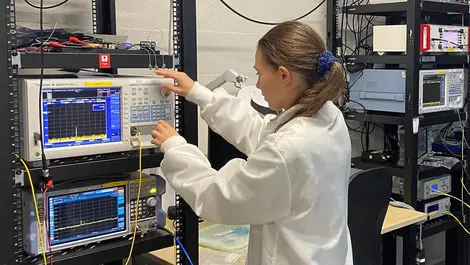
Demand for denser AI data-centre links is pushing Enlightra to validate comb-based laser chips with high-resolution spectrum testing.
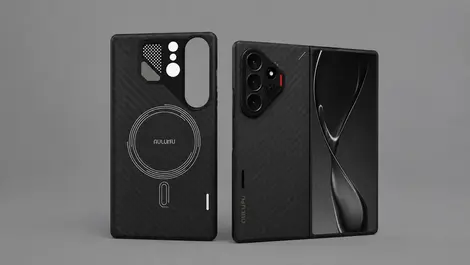
Samsung foldable owners now have a slimmer protection option as AULUMU targets heat, grip and magnetic accessory support.
The partnership is meant to ease power and cooling bottlenecks as AI data centre demand forces operators to secure specialist systems earlier.
Rising AI workloads are forcing operators to simplify power and cooling controls as data centres race to come online faster and cut commissioning risk.