

MSPs see voice as part of wider IT offer, Gamma says
Tue, 21st Apr 2026
Gamma says managed service providers are increasingly treating voice as part of a broader IT offer rather than a standalone telecoms product. That shift is changing how partners assess suppliers and where they see risk.
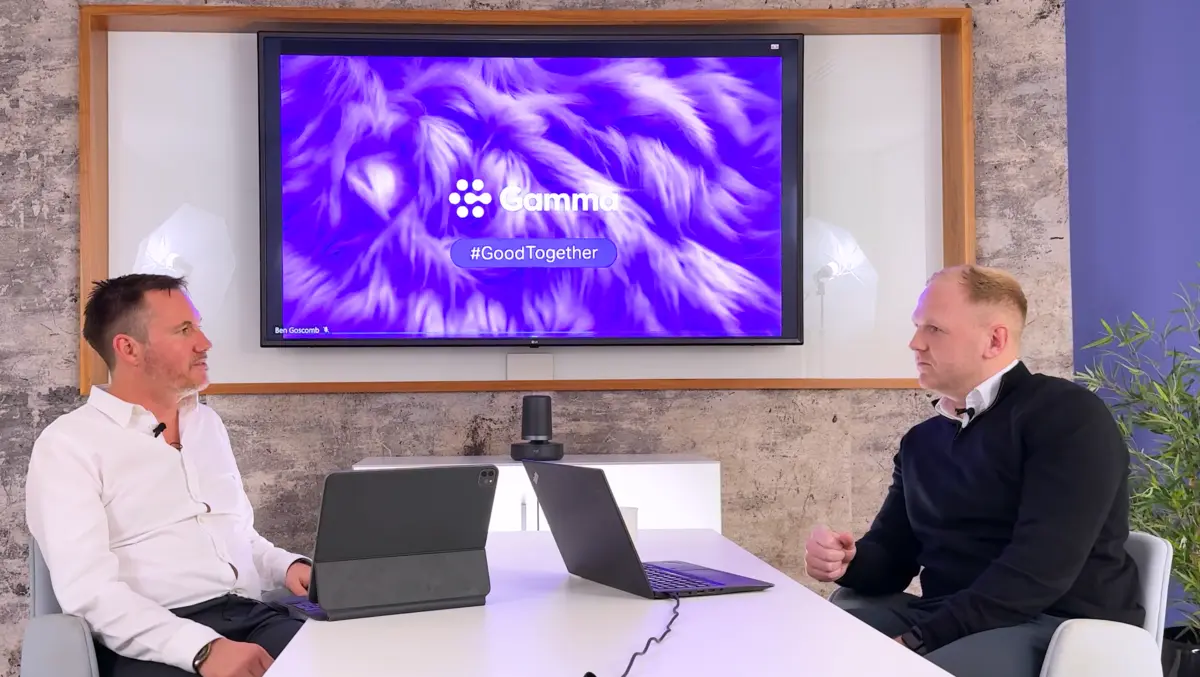
Will Morey, Managing Director of Gamma Business, and Jed Easton, Senior Partner Acquisitions Manager at Gamma Business, outlined that view in a discussion about the voice services market in the MSP channel.
Both described a market where the boundary between telecoms and IT has weakened. According to Easton, many larger partners now sell IT services alongside communications, while IT firms are also moving into telephony because voice now sits naturally on top of networking and wider managed services.
Morey said the market now runs from legacy voice resellers at one end to fully integrated MSPs at the other. Between them is a larger group of partners that grew out of either voice or IT and now offer combined services spanning areas such as managed cyber security, voice and network support.
He argued that the middle of that spectrum is likely to benefit most as larger technology groups play a bigger role in unified communications. Gamma identified Microsoft Teams, Operator Connect, Webex and Cisco as the main platforms around which it has built its partner offer.
Easton said investment by the largest vendors was shaping buying decisions. "It's investing into those companies because they are the ones that are investing in their product," he said.
The discussion also highlighted growing pressure on smaller specialist providers. Morey said niche voice suppliers face a tougher market as larger vendors invest heavily in product development, AI and security, making it harder for smaller UCaaS providers to keep up.
In that environment, MSPs are focusing less on voice as a distinct product and more on how well it fits into broader software estates. Morey noted that businesses may spend far more each month on software such as Salesforce or HubSpot than on voice, making integration with productivity tools, CRM systems and workflow platforms more important than telephony features alone.
Easton said that trend can make the underlying voice product less important than its ability to connect with other systems. MSPs, he added, want to reduce the number of separate applications in use and prefer communications tools that fit smoothly into existing software environments.
Risk focus
A central theme was risk. Morey said MSPs with larger support and cloud contracts do not want a smaller voice contract to damage a broader customer relationship. As a result, providers are judged on reliability, governance, compliance and ease of support rather than headline margins.
"One of the messages I got loud and clear was don't think about this as selling a product. Think about this much more in terms of risk management," Morey said.
Easton said the same concern applies to firms selling several services into one account. "You want confidence in what you're selling. That tiny part of your overall proposition isn't going to ruin the relationship you have with your customers," he said.
Morey also said traditional sales arguments around high margins in voice are less persuasive for MSPs whose main income comes from broader IT support contracts. In his view, a low-cost offer may look attractive on paper but still fail if it creates support, compliance or reliability problems.
Single view
Gamma also pointed to a growing preference among customers and partners for fewer suppliers. Easton said MSPs increasingly want to buy telephony, security, mobile, data and networking from one provider and manage those services in one place.
That has increased the importance of partner portals and APIs, both for service management and for deeper integration with customers' own systems. Some partners, Easton said, want to provision and control services through their own tools rather than rely solely on a supplier interface.
Gamma also argued that bringing UCaaS and connectivity together within one support setup can shorten problem resolution times. Morey said a single provider can trace faults from the network through to the communications platform more easily than when services are split across multiple vendors.
Easton added that this visibility supports either self-service diagnosis through administration tools or escalation to specialist support teams, helping reduce the time needed to identify and fix issues affecting voice or data services.
Trust issue
Operational simplicity was another theme. Easton said telecoms billing has often been too complex for MSPs, and that partners want fewer usage-related surprises, including around minute bundles and overage charges. Morey added that MSPs operate on long-term service relationships, which places more weight on day-to-day efficiency than in more transactional parts of the voice market.
The discussion ended with a focus on trust between MSPs and their suppliers. "Trust is the number one thing and as a channel organisation of twenty years here at Gamma and for my career a fair bit longer, it's the one thing that I remember from every conversation with partners," Morey said.