

PyTorch Foundation adds nine members, including Shopify
Wed, 21st Oct 2026 (Today)
The PyTorch Foundation has added nine new members, including three at the platinum tier.
The new members are Nebius, Nscale, Shopify, Lablup, LightSeek Foundation, Messiah University, Siksha 'O' Anusandhan, SKOPOS INDIA FOUNDATION and Valencia College.
Nebius, Nscale and Shopify joined as platinum members. LightSeek Foundation and Lablup joined at the silver tier, while the four academic and non-profit organisations joined as associate members.
The foundation operates under the Linux Foundation and supports the PyTorch framework and related open source AI projects including vLLM, DeepSpeed, Ray, Helion and Safetensors.
The membership expansion comes as the group seeks deeper participation across research, software development and infrastructure linked to open source AI. Activity in the ecosystem now spans model development, hardware, deployment and production systems.
Mark Collier, Executive Director of the PyTorch Foundation, said the new members reflected broader collaboration in open source AI.
"Open systems learn faster when more people, projects, and organizations are working together, creating compounding gains," Collier said.
"Open source ecosystems let breakthroughs travel between organizations instead of staying locked inside one company. We are thrilled that these new members will share their advancements with the foundation in the pursuit of accelerated, open intelligence."
Member activity
The announcement also comes with a series of updates across the broader PyTorch ecosystem, showing how contributors are extending the framework across different chips, cloud environments and inference tools.
Among the technical developments was support for ExecuTorch on Arm Cortex-M CPUs, giving developers a route from PyTorch training to on-device inference on those processors with Arm CMSIS-NN acceleration.
Another update involved TorchNeuron, an open source native PyTorch backend for AWS Trainium and associated Amazon EC2 instances. The software is intended to let researchers and developers run PyTorch workloads with a single configuration change while using features such as eager execution and torch.compile.
Google has also made native PyTorch publicly available for TPU developers through TorchTPU, designed to allow model deployment on TPUs with limited code changes and access to ecosystem projects including vLLM and Ray.
IBM, meanwhile, recently outlined work on extending PyTorch's Inductor compiler and runtime for its Spyre accelerator. According to the details released, the effort reduced Spyre-specific compiler code sevenfold while maintaining parity on tested workloads.
Shopify case
One of the new platinum members, Shopify, was also highlighted in a case study involving PyTorch and vLLM. The company uses a continual learning loop that turns production failures into updated model weights each day while reducing serving costs by 96%.
Several of the new members also explained why they had joined the foundation.
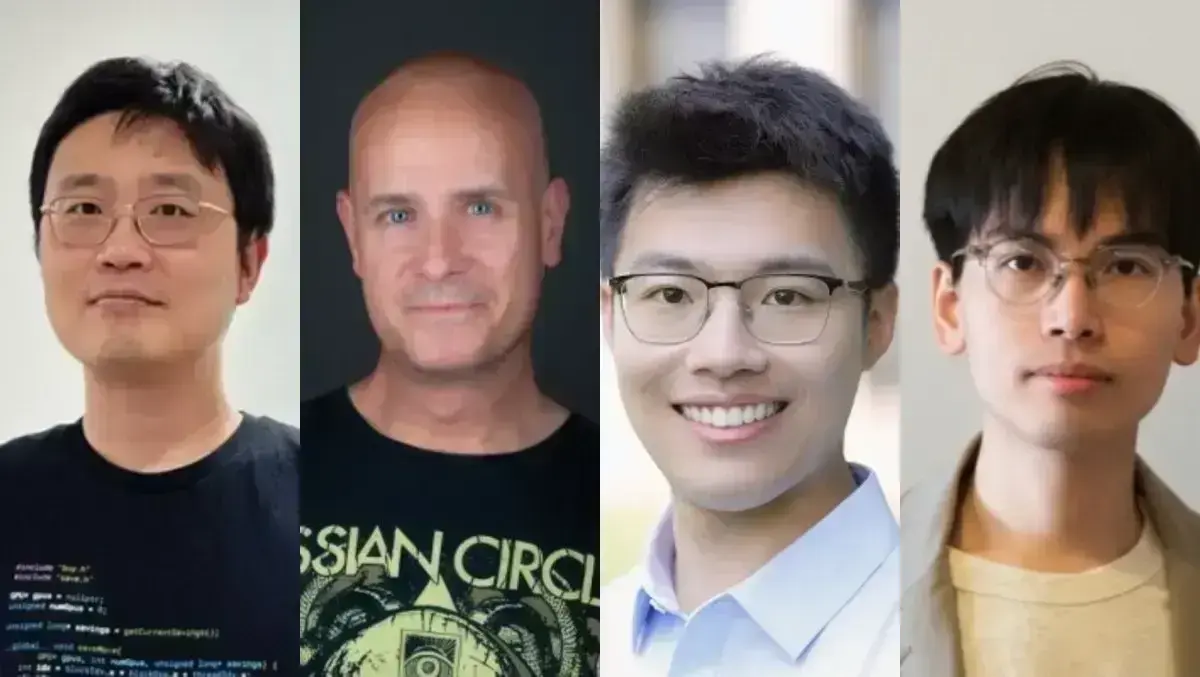
"Lablup has built Backend.AI as an open-source project from the beginning, and PyTorch workloads run on our platform every day. We have benefited greatly from the PyTorch ecosystem over the years. Joining the PyTorch Foundation is our way of supporting the community that has helped us grow and contributing what we have learned from operating AI infrastructure at scale," said Jeongkyu Shin, Co-founder and CEO of Lablup.
LightSeek Foundation cited inference infrastructure as a reason for joining.
"Efficient inference is essential to making AI accessible at global scale, and we believe the infrastructure behind it must be open. PyTorch brings developers, researchers, and hardware innovators together around a shared foundation. Joining the PyTorch Foundation allows us to contribute directly to that ecosystem and help turn advances in models and hardware into practical improvements in performance, cost, and accessibility for the next generation of AI applications," said Yineng Zhang, President and Governing Board of LightSeek Foundation.
Nebius said it sees the foundation as a place to work more closely with the wider open source AI community.
"At Nebius, we believe the future of AI depends on a strong, connected ecosystem, from training to deployment. Joining the PyTorch Foundation as a Platinum member allows us to collaborate more deeply with the community and contribute our expertise in high-performance infrastructure and applied AI. Together, we can help developers and enterprises move more easily from experimentation to production and scale their AI applications," said Ryan Hanrui Wang, Senior Vice President of Applied AI at Nebius.
Nscale framed its membership around closer alignment between AI frameworks and data centre infrastructure.
"Most infrastructure providers treat the framework and the data center as two separate problems. We treat them as one. PyTorch has remained the base layer of AI because it kept the Pythonic style researchers know, while getting serious about performance. Ray, also part of the PyTorch Foundation, does something different: getting that work to run across thousands of GPUs. With Anyscale, the creators of Ray, set to join Nscale, we're not just using that ecosystem, we're building the infrastructure underneath it. Joining the PyTorch Foundation as a Platinum member is us backing that directly, not just benefiting from it," said Nick Jones, Vice President of Cloud Native Platform Engineering at Nscale.