

Schrodinger's ERP both dead and alive, says Rimini Street
Mon, 17th Aug 2026
If it sounds too good to be true, it probably is. Cliche? Sure. But that doesn't make it untrue, so whenever an offer appears and falls into that category, probably best to pay attention. One such value proposition is leaving ERP systems well alone, but bolting advanced functionality on top of it. So, you get the AI, the automation, the slick interface increasingly demanded by smartphone-obsessed workers, and you get all of that for less money than that expended on an endless support/upgrade/migration treadmill.
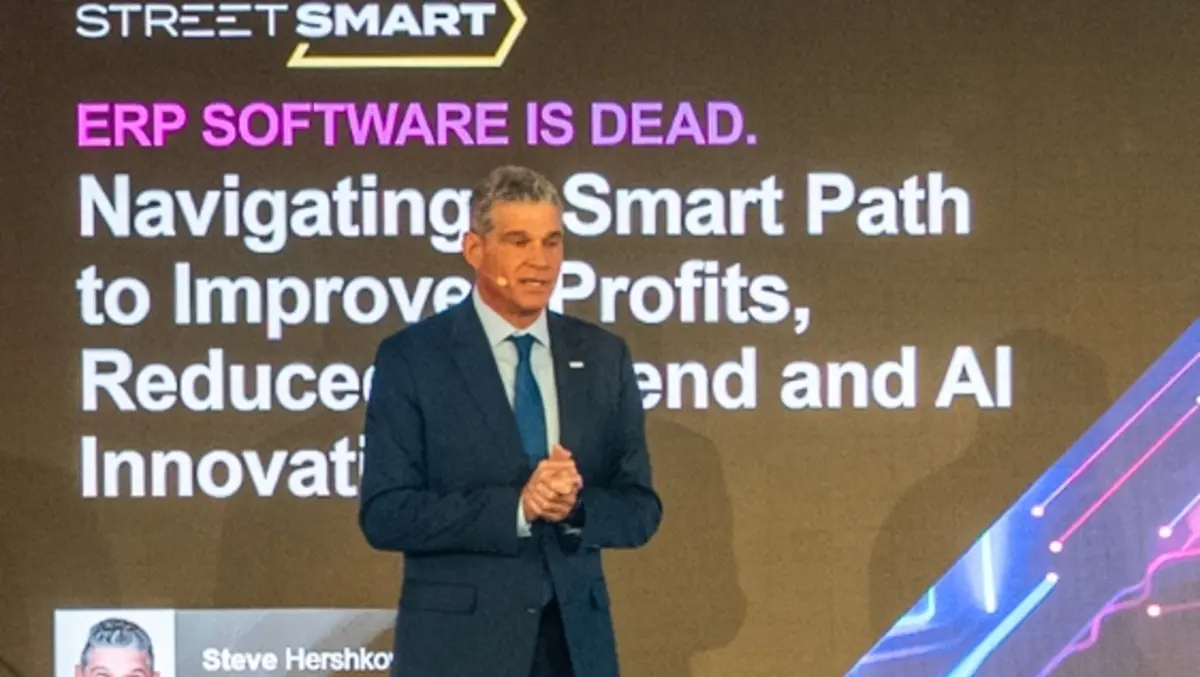
That's the big message from Rimini Street's chief revenue officer Steve Hershkowitz, who grabbed attention with a zinger. "ERP software is dead," he said. But, "What we're talking about specifically is the tools that layer onto the ERP. And if you think about ERP, going back to the Stone Ages, we have the same 10 business processes that traditionally run in the heart of these ERP systems."
This gets to the essence of Rimini Street's raison d'etre. The company is primarily known for undercutting the support services of major vendors like Oracle, SAP and others, but today also offers a portfolio of software solutions that help the users of these systems of record to get more from them, for longer. And for less money.
The value proposition stacks up on Hershkowitz's point, which is that the GL doesn't change much, whether hewn into solid rock, inscribed on papyrus, or committed to SAP S/4 HANA. Similarly, AP/AR is a steady ship. So too warehousing, inventory, CRM, and so on.
"So, the ERP software is dead," he continued, "But the ERP processes are not. Those processes are going to live on long beyond our years, and so our approach is simply to extract more value out of those processes than customers are getting today."
There's a broader context here which is, as alluded to above, that software vendors have a consistent incentive to force upgrade cycles. They do this through a carrot and stick approach: the carrot includes enticing new functionality (and, in the case of SaaS, the promise if not actuality of reduced costs). The stick, which can feel like a cudgel, includes escalating support costs and the spectre of security exposures.
When it comes to ERP, upgrades can be exorbitantly expensive; more so on those occasions where 'upgrades' require complete re-implementations, said Hershkowitz: "They [the vendors and their partners] tell them [customers] that the only way you'll get innovation on this current system is if you move it to our cloud. It's not an upgrade. It's a reimplementation of the entire system, so they force a move into something they call clean core, and then they start to build the customisations that the customer needs and the innovation, like AI as an example, on top of the clean core."
Another cliche, or idiom occurs. It's throwing out the baby with the bathwater, while running the risk of iatrogenic outcomes as Hershkowitz goes on to explain. "This is like a heart transplant on your enterprise…but maybe you don't need a transplant. They're risky and expensive. You may not make it out of the operating room alive. Maybe you need a treadmill, lose a few pounds, clean up your processes. Avoid the heart transplant. Oh, and by the way, save an enormous amount of money at the same time."
History is littered with companies that succumbed. One is Zimmer Biomet, which Hershkowitz said is currently litigating against SAP implementation partner Deloitte.
Treadmills, continued Hershkowitz, is what Rimini Street does. "What we sell is optionality. You don't have to be tied to the vendor and its upgrade or implementation schedules. Architecturally, when we approach a customer, we land them on our Smart Path methodology. We work with them to clean up their processes, and then we can start to layer on agentic AI and innovation on top of their existing system, without forcing them to re-implement the entire thing and all the risks that go along with that."
He reiterated that the traditional system of record can stay the same, while serving as the basis for the new features demanded by the modern workplace. Including evolved security.
"When we start to add agentic AI on top of these cleaner processes, we're actually taking and turning the system of record into a system of action. And we have a whole strategy and a portfolio around security, we've been doing this for 20 years. We invented independent support for large scale enterprise software systems, and have a lot of IP on hardening and securing these systems, so they no longer require vendor patching and vendor upgrades."
If we started on a cliche, why not finish that way. The proof of the pudding is in the tasting, and Rimini Street is confident in its confection. "When we switch support services, we do it at 50% of the price, along with a concierge level of service, including supporting all the customisations in these systems. So if you're spending $10 million a year on support, you now have $5 million for innovation inside the current budget envelope without having to go to the board or the CEO for more money."
Which does tend to get the mouth, rather than the eyes, watering.