

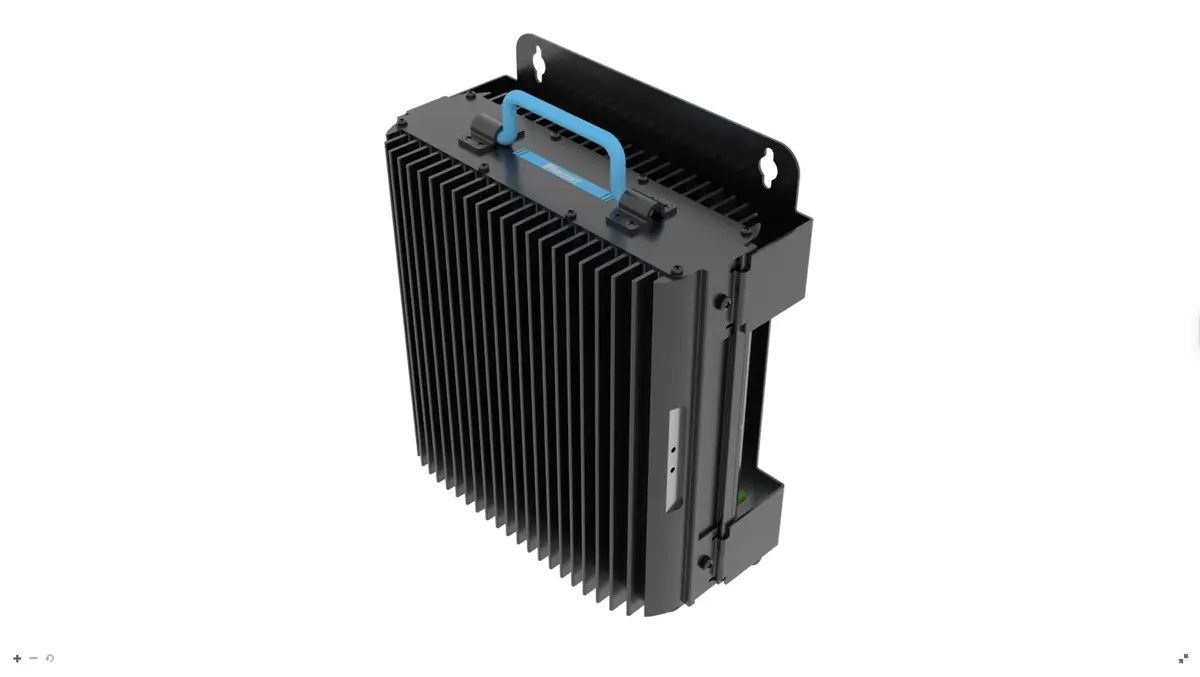
Panduit launches second-generation Class 4 power system
Tue, 9th Jun 2026
Panduit has launched the second generation of its Fault Managed Power System for enterprise environments, expanding its Class 4 power offering for sites that need centralised power distribution.
The updated portfolio adds a 2 kW system built around a 1000 W transmitter, a 2000 W power supply and a 2000 W receiver. It also includes a 600 W single-channel receiver for edge applications such as security and lighting.
The new generation increases power density and adds more receiver options while retaining a centralised architecture. It is designed to support both high-power PoE++ and DC loads across applications including enterprise switching, surveillance, wireless systems, in-building cellular, lighting and smart building installations.
Panduit's Fault Managed Power System is based on Class 4 Limited Energy technology, which delivers power over longer distances through low-voltage installation methods. The system is UL 1400 listed and SIL 3 rated, and is intended for deployment in campuses, warehouses and other large distributed sites.
A central part of the design is the consolidation of backup power. Instead of relying on distributed uninterruptible power supplies in intermediate distribution frames, the system moves UPS support to the head end, which can reduce space requirements and maintenance.
System changes
Gen 2 is also backward compatible with existing deployments. That allows customers to extend or update installed systems without replacing all existing equipment, which may matter for organisations trying to avoid disruption to live operations.
Panduit says the system uses less copper than conventional power distribution approaches. In large facilities, copper consumption can be a significant part of both material costs and installation complexity, particularly where long cable runs are involved.
The company is positioning the new range as a single platform that combines power delivery, cabling and physical infrastructure. Built-in monitoring and management tools are intended to give operators central visibility and help them identify faults more quickly.
This approach reflects a wider shift in building and campus infrastructure towards more centralised control of power and network assets. As more devices are added at the edge, operators are weighing the cost and complexity of supporting separate local power systems against centralised alternatives.
Enterprise focus
The latest system was developed for enterprise settings rather than industrial heavy-power applications. Target use cases include communications rooms, security systems, lighting networks and connected building services that need power delivered across extended distances.
Panduit, headquartered in the United States, operates in 112 locations globally and supplies electrical and network infrastructure products. Its portfolio covers physical, electrical and network infrastructure, as well as audiovisual systems used across data centres, telecom rooms, offices and plant-floor environments.
Class 4 power systems have drawn growing attention in commercial buildings because they aim to combine higher power transfer with safety controls that differ from traditional mains distribution. For organisations upgrading sites with more connected devices, that can create new options for how power is routed and protected.
Panduit says the system can simplify deployment and expansion in live environments by reducing the need for local electrical work at multiple points across a site. The architecture is also intended to lower long-term infrastructure risk and operational complexity.
The launch comes as businesses review how to support denser networks of wireless equipment, cameras, sensors and building controls without adding more fragmented power hardware across estates. In that context, products that combine centralised delivery with support for both PoE++ and DC loads may appeal to operators looking to standardise infrastructure.
"FMPS is engineered and designed by Panduit as a complete power platform, integrating power, cabling, and physical infrastructure into a single, coordinated solution," said Tom Kelly, Chief Technology Officer, Panduit.
"Drawing on the expertise that developed the first generation of UL-listed Class 4 power distribution products, Panduit has engineered a second-generation system that aligns with where the market is going while also meeting requests from customers and partners in the space. We're excited to see the market transformation taking shape as Class 4 power distribution adoption grows," said Kelly.